
Inside Mirror in the Woods #8: “City as Canvas, Youth in Motion”

Updated: Feb 4
“Tokyo fed her eyes, her ears, and her courage—until art and life became inseparable.”
Miho’s university days pulsed with creativity. Between classes, she wandered through vintage clothing stores and idiosyncratic shops, sharpening her own distinctive sense of style. She was captivated by the avant-garde designers Rei Kawakubo of Comme des Garçons and Yohji Yamamoto of Y’s—figures who had sent shockwaves through the global fashion world after their Paris Fashion Week debuts in the 1980s, opening new paths for Japanese creators. Miho and her classmates followed their rise closely, debating and dreaming with excitement.
Music, too, stirred her imagination. She was electrified by Talking Heads’ live performances and by Peter Gabriel’s Sledgehammer music video. She frequented experimental shows in tiny venues, as well as theatrical dance and music happenings—Butoh performances by pioneering groups like Byakko-sha and Sankai Juku—that challenged the boundaries of expression.
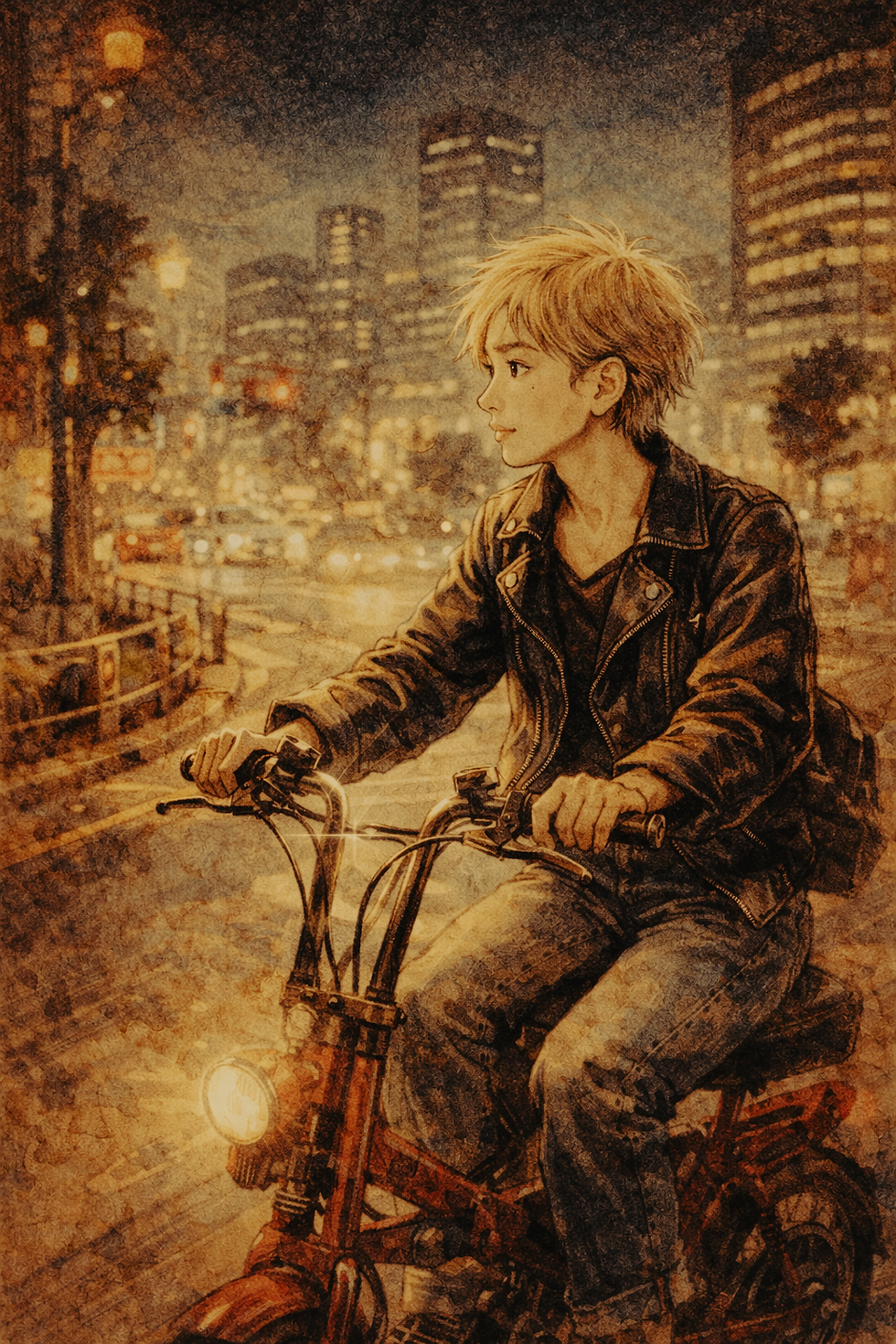
The large art supply stores of Shibuya became endless sources of discovery. Amid the constant hum of exhibitions, performances, and chance encounters, Miho soaked in the city’s energy. In what little free time she had, she pursued romance and mischief alike. Once, while working, she accidentally singed her hair with a burner and impulsively cut it short. On a whim, she bleached it blond. The look surprised even her—but she loved it. With cropped blond hair, vintage Levi’s, and a leather jacket, Miho zipped through the city on a foldable red motorbike, completely at home in Tokyo’s urban playground.
One summer, a volunteer project carried Miho hundreds of miles away to teach pottery to local children. Shoes were removed at the door. Together they wove straw sandals by hand, climbed into the mountains to harvest bamboo for chopsticks, dug clay from the earth, and shaped vessels with their own hands. They glazed the pieces using homemade shell lacquer and fired them in a bonfire at the schoolyard. As the pottery finished baking, they prepared dinner. Families and neighbors arrived with seasonal vegetables, fish, and rice balls. Serving food on freshly fired dishes, using self-carved chopsticks, the children—and the adults—were moved to tears by a shared sense of gratitude and wonder.
Miho’s whirlwind student days flew by, swift as an arrow. Graduation soon marked the close of this chapter. Standing atop the podium was the renowned painter Professor Koji Kinutani—the same man who, during her entrance exams, had asked if she was from Teacher Abe’s studio. As he handed Miho her diploma, he offered a simple but lasting charge: “Since you have intriguing talents, keep painting.”


Comments